When a sewer line is badly damaged, Covina homeowners often face the same choice: dig it up the traditional way, or fix it with a trenchless method. Both approaches get the job done, but they are very different in how they treat your yard, your driveway, and your daily routine.
Traditional digging opens a trench along the pipe so the old line can be removed and replaced. Trenchless repair fixes or replaces the pipe through small access points, with little to no trench at all.
Which one is right for your home? It depends on the condition of your pipe, where it runs, and what sits above it. Here is a plain-language look at how each method works and when each makes sense.
How Traditional Digging Works
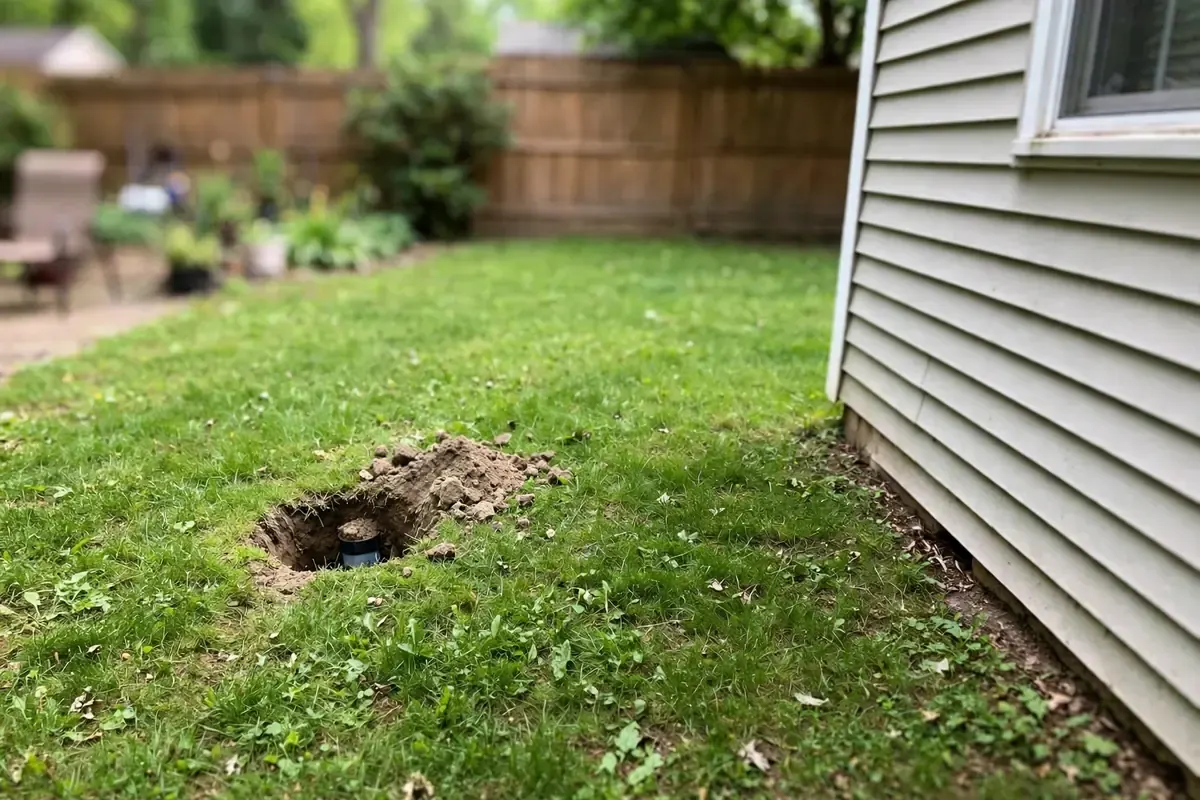
Traditional repair starts with excavation. A crew marks the path of the sewer line, then digs an open trench from the surface down to the pipe. Once the damaged section is exposed, the old pipe is cut out and new pipe is installed in its place.
After the new pipe is in, the trench is backfilled with soil, compacted, and the surface is restored as closely as possible. That restoration can include new sod, replanted beds, or repaired concrete where a driveway or walkway was cut through.
Digging is straightforward and it works on almost any kind of damage. The trade-off is disruption. Anything sitting above the line, like landscaping, patios, or driveways, has to be removed and rebuilt. The project footprint is large, and putting the property back together takes extra time.
How Trenchless Pipe Lining Works
Trenchless pipe lining, often called CIPP, creates a new pipe inside the old one. First the line is cleaned so the liner can bond properly. Then a flexible liner coated with resin is fed into the pipe through a small access point and inflated so it presses against the old pipe walls.
The resin hardens and cures into a smooth, solid new pipe that sits inside the original. The old pipe stays in the ground and simply becomes the outer shell.
Lining is a strong choice for pipes with cracks, corrosion, small breaks, or joints where roots keep entering. Because there is no trench, your yard, driveway, and patio stay untouched. You can learn more on our trenchless pipe lining page.
How Trenchless Pipe Bursting Works
Pipe bursting is the other trenchless option, used when the old pipe is too far gone for a liner. A bursting head is pulled through the existing line, breaking the old pipe apart as it moves. A brand-new pipe is pulled in right behind it, following the same path.
Only two small pits are needed, one at each end of the run, instead of a full trench. Bursting is also useful when the old pipe needs to be replaced with a larger size, since the method can make room for a bigger line.
Like lining, bursting keeps digging to a minimum and leaves the surface above mostly undisturbed. You can read more about it on our trenchless pipe bursting page.
Trenchless vs. Digging: A Side-by-Side Look
Both methods solve the same problem, but the experience of getting there is very different. Here is how they compare on the points homeowners ask about most.
Yard and surface disruption
Digging tears up everything above the pipe path. Lawns, garden beds, walkways, and driveways in the way must be removed and rebuilt, which adds cost and time beyond the pipe work itself. Trenchless methods leave the surface alone. Lining needs only a small access point, and bursting needs two small pits, so landscaping and hard surfaces stay in place.
Project footprint
A digging project brings heavy equipment, piles of soil, and a long open trench. It takes up much of the yard while work is underway. Trenchless work uses compact equipment and small work areas, so the mess and noise stay limited and the property is easier to live in during the project.
When digging is still the right call
Trenchless is not the answer for every pipe. A line that has fully collapsed may not let a liner or bursting head pass through. A bellied section that sags and holds water needs its slope corrected, which means exposing it. And if there is no good access point, a targeted dig may be needed to reach the line.
Sometimes the best answer is a mix, like a sectional point repair on one bad spot combined with trenchless work on the rest. When a line is damaged beyond any repair, a full main sewer line replacement by digging gives a clean start.
How to Know Which Option Fits Your Home
Guessing is expensive. The right first step is a sewer camera inspection, which shows the inside of your pipe on a monitor. You will see cracks, roots, breaks, collapses, and bellies, along with exactly where each problem sits.
With that footage, a professional can explain which options truly fit your pipe and your property. Sometimes trenchless is clearly the best move. Sometimes digging is the honest answer. Either way, you decide with real information instead of guesswork.
Not sure which way to go?
If your sewer line needs repair and you are weighing trenchless against digging, we can help you sort it out. Browse our FAQs for quick answers about inspections and repairs, or reach out through our contact page to describe your situation. A camera look inside the line is the fastest way to know which method fits your home.