That rotten egg smell drifting up from a drain is hard to ignore, and it is trying to tell you something. Sewer gas is the mix of gases produced as waste breaks down in your sewer line, and under normal conditions your plumbing is designed to keep it out of your home. When you smell it indoors, something in that system is not doing its job.
Most causes are simple and easy to check: a drain unused for weeks, a worn toilet seal, or a vent pipe blocked by leaves can all let sewer gas slip inside. This guide walks through the common causes, the checks you can do yourself, and when to call a professional.
One safety note first. Natural gas is given a rotten egg smell on purpose so leaks are easy to notice. If the smell is strong, if you are unsure whether it is sewer gas or natural gas, or if anyone feels dizzy, leave the house and call your gas utility or emergency services from outside. Do not flip switches until the home has been checked.
1. Dry P-traps in rarely used drains
Every drain in your home has a P-trap, the U-shaped bend in the pipe under a sink, shower, or floor drain. The trap holds a small amount of water at all times, and that water acts as a seal that blocks sewer gas from rising into the room. As long as the trap stays full, gas stays out.
When a drain goes unused, the water in the trap slowly evaporates, and after a few weeks the seal can dry out completely. Guest bathrooms, floor drains, laundry drains, and wet bars are the usual suspects, as is any home that sat empty during a vacation or remodel.
The fix is as simple as it gets. Run water into every drain for about thirty seconds, including ones you rarely use. For floor drains, pour in a bucket of water. If a drain will stay unused for a long stretch, running water through it once a month keeps the trap sealed. If the smell disappears after you refill the traps, you found the cause.
2. A failed wax ring under the toilet
Your toilet sits on a wax ring that seals the connection between the toilet base and the drain flange in the floor. The ring compresses when the toilet is installed and forms an airtight and watertight seal. Over time the wax can dry out, shift, or fail, especially if the toilet rocks or was never fully stable.
The signs are distinctive. You may smell sewer gas near the toilet even when the bathroom is clean, see water seeping at the base after flushing, or notice the toilet wobble when you sit down. A failed ring can also let water leak under the floor, where it damages the subfloor quietly over time.
Replacing a wax ring means removing the toilet, scraping off the old wax, setting a new ring, and reseating the toilet level. It is straightforward for a plumber but messy and easy to get wrong. Do not caulk around the base to trap the smell: that hides the leak while damage continues underneath.
3. A blocked or broken vent stack
Your plumbing has vent pipes that run up through the roof. Vents do two jobs: they let sewer gas escape safely above the house, and they let air into the drain system so water flows smoothly. When a vent is blocked or broken, gas has nowhere to go but back through your drains, and fixtures may gurgle or drain slowly at the same time.
Vents get blocked by leaves, bird nests, and debris, and a vent pipe can crack or separate inside a wall or attic. Sewer smell plus gurgling drains is a strong hint the vent system is involved, as is a smell that worsens when a large fixture drains, since the rush of water pushes air through the system.
Vent work usually means getting on the roof or opening a wall, so it is not a do-it-yourself job for most homeowners. A plumber can check the vent from the roof, clear a blockage, and inspect the line for cracks. If the smell and gurgling arrived together, mention both when you call, because that pairing helps narrow the search quickly.
4. Drain odors and biofilm buildup
Not every bad drain smell is sewer gas. Drains also grow biofilm, a slimy layer of bacteria that coats the inside of pipes, stoppers, and strainers. Biofilm smells musty or sulfur-like, and it builds up fastest in kitchen drains, garbage disposals, and shower drains where soap, hair, and food residue collect.
Biofilm odor is usually strongest at one fixture and fades when water runs, while true sewer gas tends to linger and may show up at several drains. Start with the visible parts: pull out the stopper or strainer, scrub away the slime, and flush the drain with hot water for a minute or two. For a garbage disposal, running cold water while it grinds a tray of ice cubes helps scour the chamber.
Skip harsh chemical drain cleaners: they rarely remove biofilm, they can damage pipes, and they make later professional work harder. If the odor survives a good cleaning or returns within days, the cause is probably deeper in the line. Hydro jetting scours the pipe walls clean and often answers buildup that surface cleaning cannot reach.
5. Smoke testing to find hidden leaks
When the source of a sewer smell stays hidden, plumbers have a tool made for exactly that problem: a smoke test. Non-toxic smoke is pumped into the sewer system under light pressure, and the technician watches for where it escapes. Smoke drifting from a crack, a bad seal, an open pipe, or a broken vent joint marks the leak point clearly.
Smoke testing is especially useful in older Covina homes, where cast iron and clay pipes can crack in ways a camera might miss, and where vent joints hide inside walls. It can also reveal dry traps, missing caps, and abandoned lines that were never sealed.
The smoke is non-toxic and the test is quick. If you have chased a sewer smell through every drain without finding it, ask about a smoke test along with a sewer camera inspection. Between the two, most hidden sources show themselves, and sewer line leak detection can pinpoint the repair spot.
6. Simple homeowner checks to try first
Before you call anyone, work through these quick checks. They take about fifteen minutes and solve the problem more often than expected.
- Run water into every drain, including guest bathrooms, floor drains, and laundry drains you rarely use.
- Sniff each drain separately to find which fixtures smell and which do not.
- Check whether the toilet rocks or shows water at its base after flushing.
- Look under sinks for leaks, damp cabinets, or dried-out traps in seldom-used vanities.
- Note whether gurgling happens with the smell, which points toward a vent or main line issue.
- Check the sewer cleanout cap outside. A cracked or missing cap can let gas escape near the house. Our guide on sewer cleanouts explains where to find yours.
Write down what you find. Which drains smell, when the smell started, and whether gurgling or slow drains came with it are all useful details for a plumber, and they speed up the diagnosis considerably.
7. When to call a plumber
Call a plumber if the smell stays after you refill the traps and clean the drains, if several fixtures smell at once, or if sewage is visible anywhere. Those patterns point to a crack, a vent failure, or a main line problem that needs professional equipment to find and fix.
Also call if the smell comes with gurgling, slow drains across the house, or wet spots in the yard. Together those signs suggest the main line is involved, and a camera inspection usually comes first because it shows the exact problem and location.
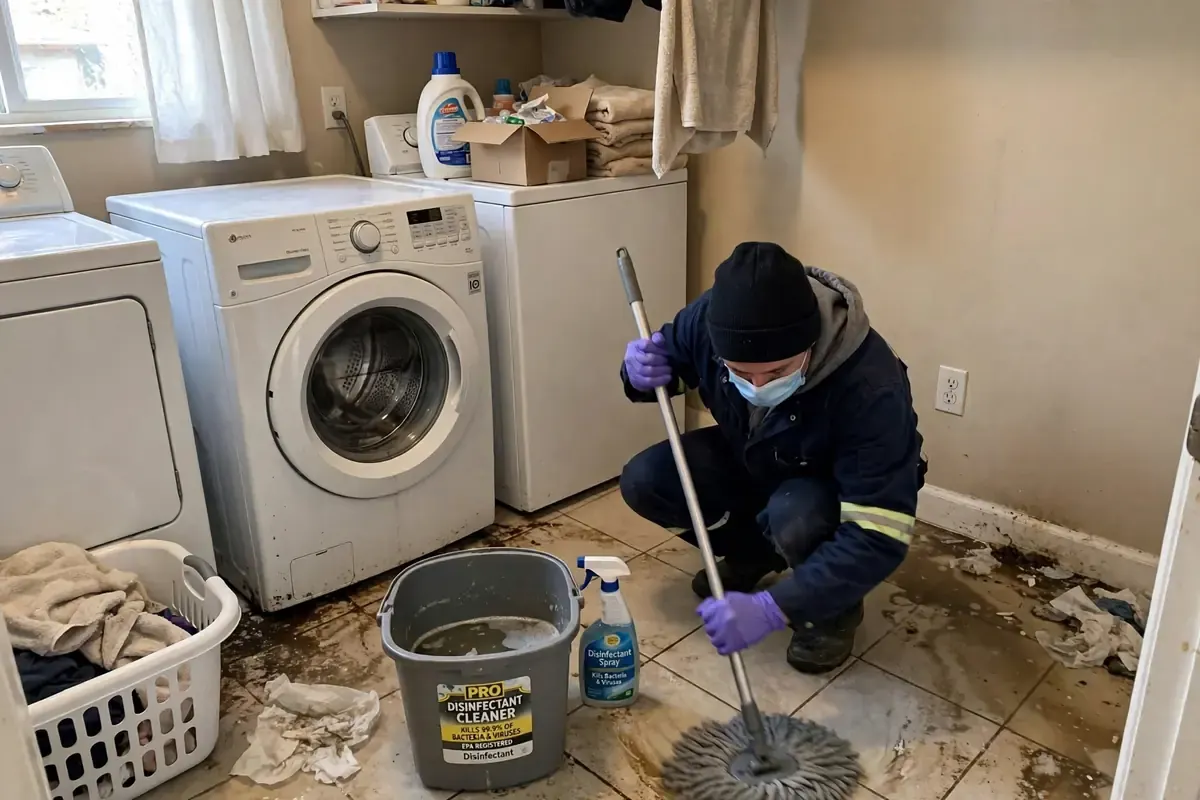
If sewage has entered your home, keep people and pets away from it. Sewage carries germs, and the affected area should be cleaned and disinfected properly. Our sewage cleanup and decontamination service covers that work, and the line problem behind it should be fixed so it does not happen again.
A smell is a clue, not just a nuisance
A sewer gas smell means your plumbing is asking for attention. Sometimes the answer is as simple as water in a dry trap. Other times it points to a seal, a vent, or a pipe that needs professional help. Tracking it down early keeps a small fix from becoming a bigger repair.
For more homeowner guidance, read our post on sewer cleanouts and the 7 warning signs of a sewer backup, browse our FAQs for quick answers, or reach out through our contact page to describe what you are smelling. If you need help now, visit our Covina sewer backup repair home page for service details.