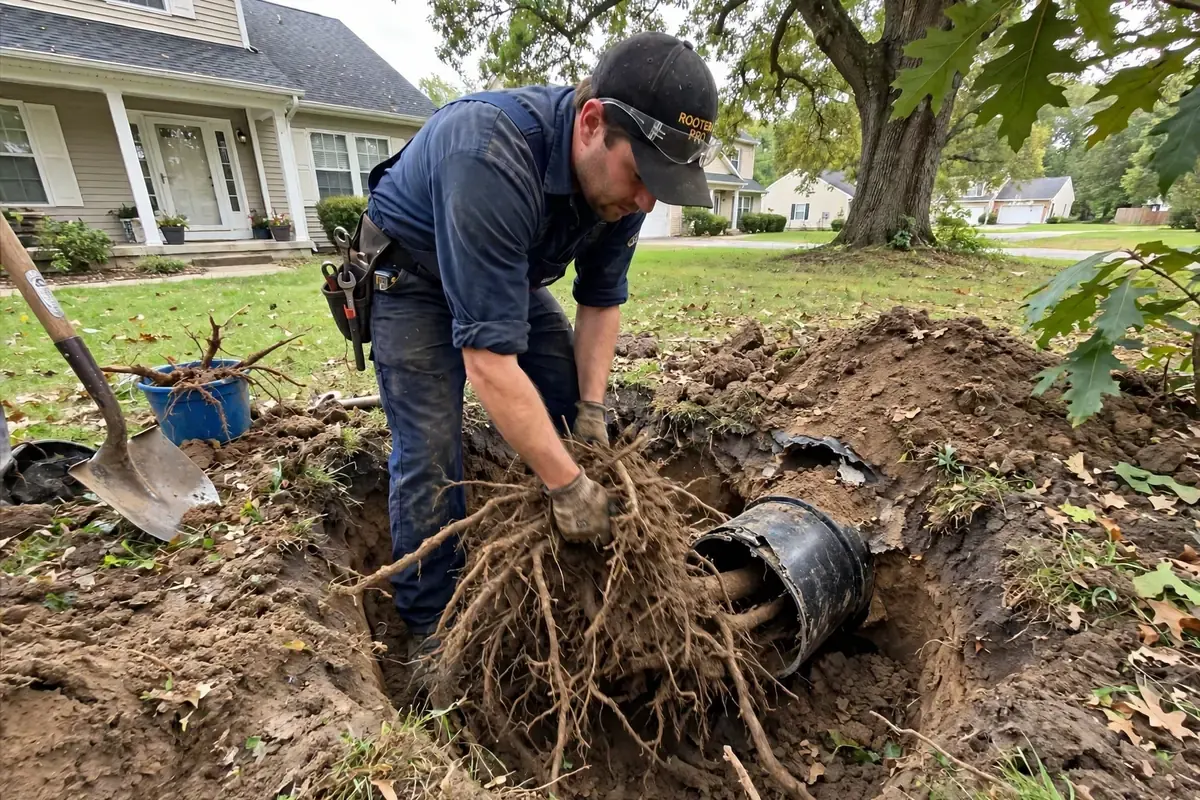
Covina is known for its tree lined streets and mature landscaping. But underground, those same root systems are the most common cause of sewer line trouble in the area. A tree root does not need much of an opening. A tiny crack or a loose pipe joint is enough. Once inside, roots grow fast in the steady supply of water and nutrients, and they can turn a small opening into a major blockage.
Much of the city was built when clay pipe was the standard for home sewer lines. Clay pipe comes in short sections, and every joint is a possible entry point for roots. Add decades of growth from mature oaks, ficus, and sycamores across the San Gabriel Valley, and you get the perfect setup for root intrusion. If your home is more than 30 years old and has large trees in the yard or near the sidewalk, your sewer line deserves attention even if nothing seems wrong yet.
How roots get into a sewer line
Roots grow toward moisture. A sewer line carries water every day, and even a sound pipe releases a small amount of vapor through its joints. Tree roots sense that moisture and grow toward it. When they reach the pipe, hair thin strands push through tiny cracks, offset joints, or worn seals. Inside they find water, warmth, and nutrients, so over months and years those strands thicken into a dense mat that catches paper, grease, and waste. What started as a hairline entry becomes a living clog that keeps growing back every time it is cut.
Signs that roots have reached your line
Root intrusion rarely announces itself all at once. Watch for several drains slowing down at the same time, gurgling sounds when you flush or run the washer, and toilets that need a second flush more often than usual. A patch of lawn growing faster and greener than the rest can also mean moisture is leaking from the line below it. If sewage ever backs up into a tub, shower, or floor drain, treat it as urgent and stop running water right away. We cover these clues in more detail in our guide to the warning signs of a sewer backup.
One pattern is almost a fingerprint of root trouble: the same clog keeps coming back. You clear the drain, it works for a few weeks, then it slows down again. Cutting roots out of the pipe only trims them. The root mass outside the pipe keeps growing, so the blockage returns until the pipe itself is repaired or sealed.
How a sewer camera inspection finds the problem
Guessing at the cause of a drain problem wastes time and money, so the smart first step is to look inside the line. A sewer camera inspection in Covina sends a small waterproof camera through the pipe and shows exactly what is happening underground. The video reveals where roots entered, how far they have spread, and whether the pipe is cracked, offset, or collapsed. It also shows the pipe material and its overall condition, which decides what kind of fix makes sense. Without that look inside, any repair is just a guess.
How professionals remove roots
Once roots are confirmed, the next step is to clear them out. Specialized cutting heads shred root masses inside the pipe, and high pressure water jetting scours the pipe walls clean. Professional tree root removal restores flow and buys the line more time. But it is worth knowing the honest limit of this step: cutting does not close the opening the roots came through. If the pipe still has cracks or loose joints, roots will grow back. That is why removal is often paired with a lasting repair to the pipe itself.
Fixing the pipe so roots stay out
The lasting answer is to seal or replace the damaged section so roots have nowhere to enter. For many homes, trenchless sewer repair in Covina is the least disruptive option. A new lining can be created inside the old pipe, sealing cracks and joints without digging up the yard, driveway, or landscaping. When a pipe is too damaged for lining, pipe bursting can pull a brand new pipe through the old line with only small access points dug.
Where the line has collapsed or the damage runs too deep for trenchless methods, a full sewer line repair in Covina CA may be the right call. A camera inspection makes that decision clear, because you can see the true condition of the pipe instead of guessing from the surface.
What you can do to prevent root intrusion
You cannot stop trees from seeking water, but you can lower the odds of a root invasion. When planting new trees, keep them as far from the sewer line path as the mature size of the tree allows, and avoid thirsty species right over the line. A root barrier set between a tree and an older line can redirect growth away from the pipe. And if your home has clay or aging pipes, a camera check every couple of years catches small root entries before they become blockages.
When to call a professional
Call sooner rather than later if more than one drain is slow, if gurgling is spreading from fixture to fixture, or if a sewage smell will not go away. These are signs the main line is involved. And if wastewater is already coming up into your home, stop using water and get help right away. For sewer backup repair in Covina, a camera inspection is the usual first step, because it turns a mystery into a clear plan. The earlier roots are found, the more options you have, and the simpler the fix tends to be.
If roots may be growing into your line, do not wait for the next backup to find out. We help homeowners across Covina and the San Gabriel Valley with inspections, root removal, and lasting repairs.